Reimagining Creativity: The Rise of AI as a Creative Partner
Art has always been a dialogue between human ingenuity and the tools available at any given time. Today, the new tool is AI, and it's stepping into the role of collaborator, offering artists new ways to generate ideas, design, and produce work. From composing music to painting alongside humans, AI-driven creativity is already making waves. Leaving aside ethical considerations for a moment, AI's integration into art has opened new avenues for expression and innovation. Here are few ways that creators across various artistic fields are leveraging AI:
Ideation and Concept Development
AI has become a valuable collaborator in the ideation phase, assisting artists in generating innovative concepts and expanding creative possibilities. Nigerian artist and filmmaker Malik Afegbua used AI to create "The Elder Series," a collection of images depicting seniors on fashion runways, adorned in stylish and colorful attire. Using Midjourney, Afegbua generated these images by inputting text prompts and refining the outputs with Adobe Photoshop. This project challenged societal stereotypes about aging by portraying elderly individuals in high-fashion settings typically reserved for younger models. Through bold styling, confident poses, and vibrant, avant-garde outfits, the series redefines aging as aspirational rather than limiting, triggering a broader conversation about representation and beauty standards in fashion. The World Health Organization praised Afegbua's work for positively contributing to the global effort to combat ageism.
Design and Visualization
In architecture and fashion, AI has become instrumental in design and visualization, enabling rapid prototyping and exploration of complex forms.
Zaha Hadid Architects has embraced AI to enhance their design processes, using machine learning algorithms to generate intricate architectural forms and photorealistic visualizations. "Not every single project is using it but let's say most. You don't even have to do much, you can generate ideas with clients and within the team, because of light, shadow, geometry, coherency, the sense of gravity and order is so potent and the ideas are still striking," says studio principal Patrik Schumacher. This integration has led to a significant boost in productivity, allowing the firm to produce renderings in a fraction of the time previously required.
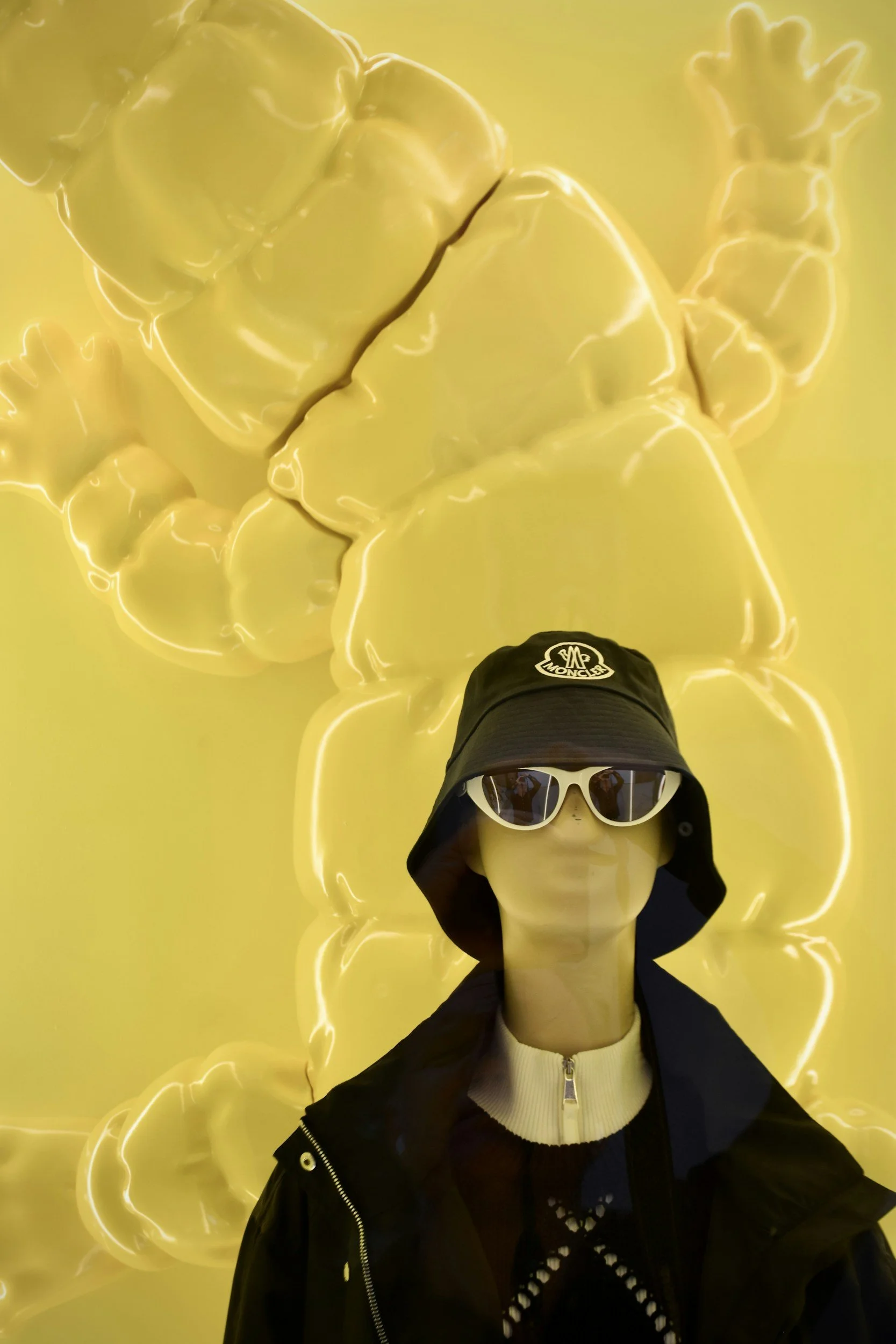
In the fashion industry, Chinese artist Lulu Li collaborated with Moncler to create a ready-to-wear collection derived from AI-generated designs. The project involved transforming AI-generated concepts into tangible garments, showcasing how AI can bridge the gap between digital creativity and physical production. This collaboration highlights the potential of AI to introduce innovative aesthetics and streamline design processes in fashion. While the speed and efficiency AI brings to fashion are impressive, the industry must also consider its environmental footprint. Rather than accelerating trends and consumption cycles, AI could be used to optimize material use, reduce waste, and support sustainable design practices.
Rendering and Production
AI's capabilities extend to rendering detailed visuals and facilitating the production process, particularly in media and entertainment.
The Beatles' track "Now and Then" exemplifies AI's role in music production. Initially recorded by John Lennon in the late 1970s, the demo was later worked on by Paul McCartney, Ringo Starr, and George Harrison but was shelved due to technical limitations. In 2021, AI was employed to isolate and enhance Lennon's vocals and piano, allowing the completion of the track. This process demonstrates how AI can resurrect and refine archival recordings, blending historical material with modern technology.
In animation, the short film "The Dog & The Boy" utilized AI to generate background art, reducing the workload on human artists and expediting the production process. While this approach sparked discussions about the role of AI in creative fields, it also showcased AI's potential to handle repetitive tasks, allowing artists to focus on more intricate aspects of their work.
Collaboration and Performance
AI fosters innovative collaborations between technology and human creativity, leading to unique performances and interactive experiences.
Canadian-born artist Sougwen Chung explores the convergence of human and machine creativity through her 'Drawing Operations' series. Partnering with robotic arms powered by AI, Chung co-creates artworks that blend her hand-drawn lines with machine-generated strokes. This collaboration examines the nuances of authorship and the evolving relationship between humans and technology in the creative process. Her work challenges traditional notions of art-making, inviting viewers to reconsider the roles of artist and tool in the age of AI.
Future Prospects
While AI offers numerous benefits in supporting creativity, it also raises concerns about job displacement, the authenticity of AI-generated art, and the potential for misuse. Looking ahead, AI's role as a creative partner is poised to expand, with advancements in generative models enabling artists to create interactive and adaptive artworks that respond to real-time data or audience engagement. Emerging AI-driven installations could evolve dynamically based on viewer reactions, while AI-assisted choreography may introduce new forms of movement beyond human capability. As AI becomes more intuitive, it may even collaborate in storytelling by generating personalized narratives that adapt to individual experiences. As technology evolves, AI could become more adept at understanding and replicating human emotions, leading to more nuanced and expressive art forms. The collaboration between AI and human creators may also lead to entirely new genres and mediums, further blurring the lines between technology and artistry.
If you would like to explore what AI means for your creative team, how and when to leverage it, contact us.
